


How Digital Verification Reduces False Waste Collection Reports
- umangvindheshwari
- 15 hours ago
- 5 min read

In conventional waste collection operations, a report may state that a vehicle or sanitation worker completed a collection route even when there is insufficient evidence to confirm what actually happened. Manual registers, verbal updates, spreadsheets, and basic vehicle tracking can make it difficult for supervisors to determine whether a location was genuinely served.
This gap creates a serious operational risk. False collection reports can hide missed households, skipped lanes, delayed pickups, fuel misuse, and weak contractor performance. For Urban Local Bodies, RWAs, facility managers, and waste management contractors, the result is the same: complaints rise, trust falls, and decision-making depends on incomplete data.
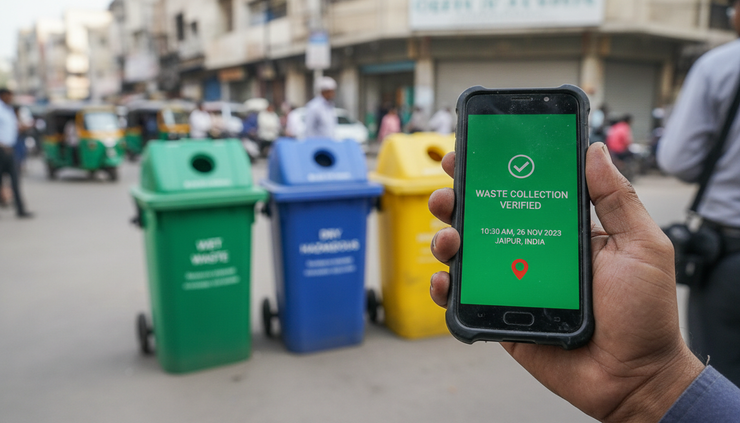
Digital verification changes this by creating a clear, time-stamped record of collection activity. Instead of relying only on claims, teams can verify service delivery through location data, route history, attendance, photos, QR codes, RFID tags, and live dashboards.

Why false collection reports happen
Most false or unverifiable reports are not always caused by deliberate fraud. Many come from weak systems.
Common causes include:
Paper registers that are filled at the end of the shift
Verbal updates from field staff with no independent proof
Spreadsheets that are updated manually
Vehicle trips that are tracked, while bin-level or household-level service is not
No simple way to compare planned routes with actual movement
Delayed complaint resolution because supervisors lack evidence
Basic GPS tracking can show where a vehicle travelled, but that alone may not confirm whether waste was collected at every assigned point. A vehicle may pass through a lane without stopping. A worker may mark a location as covered without reaching it. A contractor may submit a completed route report even when several points were skipped.
That is why waste collection monitoring needs more than location dots on a map. It needs proof tied to time, place, route, worker, and collection point.
What digital verification means in waste collection
Digital verification is the process of using digital records to confirm that a waste collection activity took place as reported. It connects field activity with verifiable evidence.
In door-to-door waste collection, this can include:
QR code scans at households, shops, societies, or bins
RFID-based collection confirmation
GPS trail of the vehicle or worker
Time and date stamp for every action
Photo evidence where required
Mobile app check-ins by sanitation staff
Supervisor sign-off through a dashboard
Alerts for skipped points or route deviations
This creates digital proof of collection that supervisors can review without waiting for end-of-day paperwork. It also supports better waste collection accountability because each entry is linked to a specific person, vehicle, place, and time.
For teams managing municipal waste collection, this evidence helps separate genuine field constraints from false completion claims.
How digital verification reduces false reports
It confirms presence at the collection point
With geofencing, the system can define a digital boundary around a collection point, lane, ward, transfer station, or facility. A scan or check-in is valid only when the worker or vehicle is within the approved area.
This prevents false marking from another location. For example, if a sanitation worker tries to mark a household as served from a different street, the system can flag the entry.
It compares planned routes with actual movement
GPS waste collection tracking helps supervisors compare the assigned route with the route actually taken. This is especially useful for route compliance.
If a collection vehicle skips a block, takes an unapproved diversion, or finishes unusually fast, the software can highlight the exception. Supervisors no longer need to manually inspect every trip. They can focus on routes that show gaps, delays, or suspicious patterns.
It creates time-stamped service records
A digital record shows when each collection action took place. This helps answer practical questions:
Was the collection done on the scheduled day?
Did the vehicle reach the area within the service window?
Which points were missed?
Was a complaint raised after or before the actual visit?
For RWAs and facility managers, time-stamped records reduce disputes with vendors. For ULBs, they support clear performance reviews.
It reduces dependence on end-of-day reporting
When data comes from the field in real time, supervisors do not have to wait for manual reports. Real-time waste collection monitoring allows faster intervention.
If a lane is missed, the issue can be corrected on the same shift instead of becoming a citizen complaint the next day.

What supervisors can track with waste collection software
Good waste collection software brings several data points into one system. This makes waste collection tracking easier to review, compare, and act on.
Verification area | What it helps confirm |
GPS route trail | Whether the vehicle followed the assigned route |
QR or RFID scan | Whether a specific point was served |
Time stamp | When the collection activity happened |
Photo proof | What was collected or what issue was found |
Missed point alerts | Which households, bins, or facilities need follow-up |
Worker attendance | Whether field staff were present on duty |
Dashboard reports | Ward-wise and contractor-wise performance |
This supports better waste collection management because decisions are based on field evidence, not assumptions.
Practical examples of digital verification in action
A municipal supervisor may receive a report that all households in a ward were covered. With digital verification, the supervisor can open the dashboard and see that 92 per cent of assigned QR points were scanned, two lanes were skipped, and one vehicle deviated from the approved route.
An RWA may receive complaints that wet waste was not picked up from one block. Instead of arguing with the contractor, it can check the digital record for that block. If no scan was logged, the missed pickup is clear.
A facility manager may want proof that daily waste was collected from a commercial property. A photo, GPS location, and time stamp provide collection verification without relying on paper slips.
These examples show how waste management technology improves daily control. It does not replace supervisors. It gives them better evidence.
How SafaiMitra supports smarter waste operations
SafaiMitra helps organisations move from manual reporting to digital waste management with tools built for field realities. By combining GPS trails, collection verification, mobile app reporting, alerts, and dashboards, it supports a more transparent model of smart waste management.
For municipal waste management, this can improve contractor monitoring, ward-level performance checks, citizen complaint handling, and route planning. For contractors, it creates a clear record of completed work. For supervisors, it reduces time spent chasing updates and checking registers.
The goal is not only to catch false entries. The larger goal is to build a system where accurate reporting becomes the normal way of working.

Better data leads to better accountability
False reports thrive when proof is weak. Digital records make the collection process easier to verify, audit, and improve.
With digital verification, organisations can reduce missed pickups, improve field workforce tracking, strengthen route compliance, and respond faster to service gaps. Over time, this builds trust between citizens, contractors, supervisors, and municipal authorities.
For any organisation responsible for waste operations, the next step is clear: move from reported collection to verified collection. That shift creates cleaner records, cleaner streets, and a more accountable waste collection system.
Comments