


Digital Waste Weighment for Better Collection, Segregation and City Planning

A city cannot manage what it does not measure. In solid waste management, the most basic number is also one of the most useful: how many tonnes of waste were actually collected, from which route, by which vehicle, and in what condition.
Estimates can help during planning, but daily operations need actual tonnage. When municipal teams know the real quantity of wet waste, dry waste, mixed waste and rejects moving across the city, they can plan routes, monitor contractors, allocate vehicles, review segregation, and prepare reliable reports. This is where digital waste weighment becomes a practical foundation for cleaner, more accountable cities.

Why municipalities need accurate waste collection data
Most Urban Local Bodies handle waste through a network of wards, routes, vehicles, drivers, helpers, transfer stations, material recovery facilities, composting units and disposal sites. If the data is incomplete or estimated, gaps remain hidden.
Accurate weighment data helps answer practical questions:
How much waste did each ward generate today?
Which vehicle completed its assigned route?
Was the collected waste segregated or mixed?
Is the processing facility receiving more wet waste than it can handle?
Are some routes under-served or over-served?
Is contractor billing supported by verified collection records?
These answers matter for daily monitoring as well as long-term planning. A city planning new composting capacity, for example, needs to know actual wet waste tonnage, not only the number of households covered.
What waste weighment integration means
Waste weighment integration means connecting weighing systems with digital collection records. Instead of keeping weighbridge slips, vehicle logs and route information in separate registers, the data flows into one connected system.
With SafaiMitra Weighment Integration, weighment entries can be linked with collection trips, vehicle numbers, routes, wards, waste type and time stamps. This reduces manual entry, improves traceability and gives municipal officers a clearer view of the collection chain.
The goal is simple: convert every weighment event into useful operational data.
How digital weighing systems capture actual waste quantity
A weighbridge or digital weighing system records the gross weight of a loaded vehicle and the tare weight of the empty vehicle. The difference gives the net quantity of waste collected, usually recorded in tonnes.
For example, if a loaded vehicle weighs 8.20 tonnes and the empty vehicle weighs 4.70 tonnes, the collected waste is 3.50 tonnes. When this entry is captured digitally, it can include:
Vehicle number
Driver or crew details
Ward and route
Waste category
Collection point or processing site
Date and time of weighment
Net waste quantity in tonnes
This creates a verified record that is far more reliable than estimates or handwritten summaries.

Connecting weighment with vehicles and routes
Weighment becomes more powerful when it is connected with vehicle-wise and route-wise records. A standalone weight entry says how much waste arrived. A connected entry shows where it came from and how it moved.
With SafaiMitra vehicle-wise collection records, municipal teams can compare the assigned route with the actual trip completed. With SafaiMitra route-wise tracking, they can see whether a route is consistently generating more waste, whether a vehicle is underused, or whether collection timings need to change.
This also supports contractor monitoring. If payments depend on service delivery, verified trip and tonnage records provide stronger evidence than manual logbooks alone.
Monitoring wet and dry waste segregation
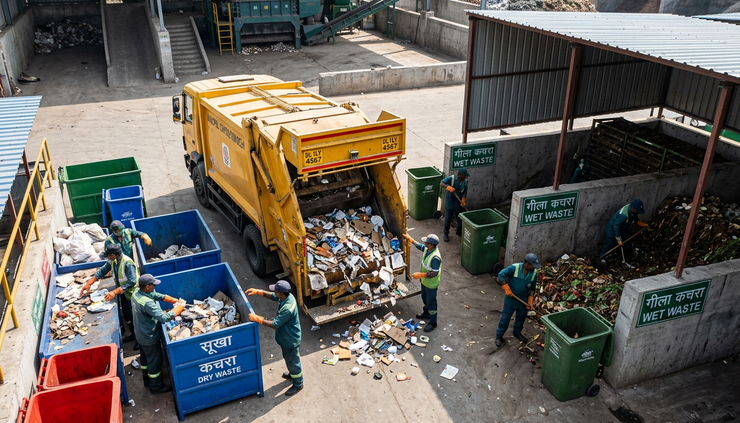
Segregation is one of the biggest operational challenges in solid waste management. Cities may collect door-to-door waste daily, but if wet and dry waste are mixed during collection or transport, processing becomes harder and costlier.
Digital weighment can support segregation monitoring by recording waste categories at the point of weighing. Wet waste, dry waste, mixed waste, construction waste or rejects can be tagged during weighment, depending on the city’s process.
SafaiMitra wet and dry waste monitoring helps municipal teams compare:
Wet waste collected from each ward
Dry waste sent to material recovery facilities
Mixed waste trends by route
Segregation performance across zones
Processing load at composting or MRF centres
When this data is reviewed daily, segregation becomes measurable. Teams can identify wards where awareness, collection discipline or route-level supervision needs attention.
Turning raw data into useful dashboards
Raw weighment entries are useful, but decision-makers need clear views. Real-time dashboards convert daily data into maps, charts and summaries that are easier to monitor.
A SafaiMitra waste collection dashboard can show total waste collected today, ward-wise tonnage, vehicle trips, wet and dry waste split, missed routes, and facility-wise receipts. This allows officers to review the city’s status without waiting for end-of-day manual reports.
Dashboards also help compare trends. If one zone suddenly shows lower tonnage, the issue may be vehicle downtime, missed collection, weighbridge delay or route deviation. If dry waste falls while mixed waste rises, segregation may be slipping.

How accurate data improves city operations
When actual tonnage is available every day, planning becomes more grounded. Municipal teams can use weighment data to improve:
Route planning
Routes can be adjusted based on actual waste generation. High-tonnage routes may need larger vehicles, extra trips or revised collection timings.
Workforce allocation
Supervisors can assign workers where collection loads are higher. This helps prevent overburdened crews and missed service areas.
Vehicle utilisation
A vehicle making frequent low-load trips may need route changes. A vehicle regularly overloaded may require support or replacement.
Processing capacity
Composting units, biomethanation plants and MRFs need steady input planning. Accurate wet and dry waste data helps match collection with processing capacity.
Daily monitoring
Officers can review collection performance each morning or evening and take quick corrective action, instead of waiting for weekly summaries.
Supporting MIS reports, audits and reviews
Municipal reporting often requires ward-wise, zone-wise and facility-wise data. Digital records reduce the burden of compiling this information manually.
With SafaiMitra MIS reporting, cities can prepare more reliable summaries for management reviews, Swachh Bharat Mission reporting, internal audits, contractor evaluations and compliance checks. Digital time stamps, vehicle details and tonnage records also create a clearer audit trail.
This improves accountability across the system. Field teams, contractors, processing centres and municipal officers can work from the same verified data.
A practical example of daily tonnage analysis
Consider a city that collects 220 tonnes of waste per day across several wards. The dashboard shows that Ward 12 usually sends 18 tonnes daily, with around 60% wet waste and 30% dry waste. Over one week, the same ward reports 18 to 20 tonnes daily, but dry waste drops sharply and mixed waste increases.
This pattern points to an operational gap. The city can check whether source segregation has reduced, whether a vehicle is mixing waste during collection, or whether the dry waste route is being missed. Supervisors can inspect the route, speak with collection crews, review timing and take corrective steps.
Without weighment-linked data, the issue may appear only as a general complaint. With daily tonnage and segregation records, the city can identify the gap faster and respond with evidence.
Measure. Track. Segregate. Improve.
Digital weighment is not only about recording tonnes. It connects collection, segregation, transport, processing and reporting into one measurable system. For municipal corporations, ULBs, sanitation officers and waste contractors, accurate weighment data supports better planning, fairer monitoring and faster decisions.
SafaiMitra helps cities move from manual estimates to verified digital records through SafaiMitra Weighment Integration, route-wise monitoring, segregation tracking, dashboards and MIS support.
Cleaner and more efficient cities need a simple operating principle: Measure. Track. Segregate. Improve.
Comments